
What channel performance comes down to
Three quantities decide whether a channel carries its weight:- Cost per click or per order — what the channel charges per acquired customer, whether as CPC, commission, or fees.
- Conversion — how many visitors actually buy. A cheap click is worthless if it does not convert.
- Margin after channel costs — what actually remains after fees, shipping, and price pressure.
Where price position fits in
On comparison shopping sites, price position is the lever that connects all three: it determines visibility (and with it, clicks), influences conversion (the front position looks attractive), and directly defines margin. A front position bought purely with discounts can ruin channel profitability just as surely as a position too far back that brings no clicks. That is why every channel review should include: where did my offers rank — and what did that position cost?How PricePirate helps
PricePirate supplies the price side of that equation: positions, competitor prices, and price changes per product and marketplace, comparable over time.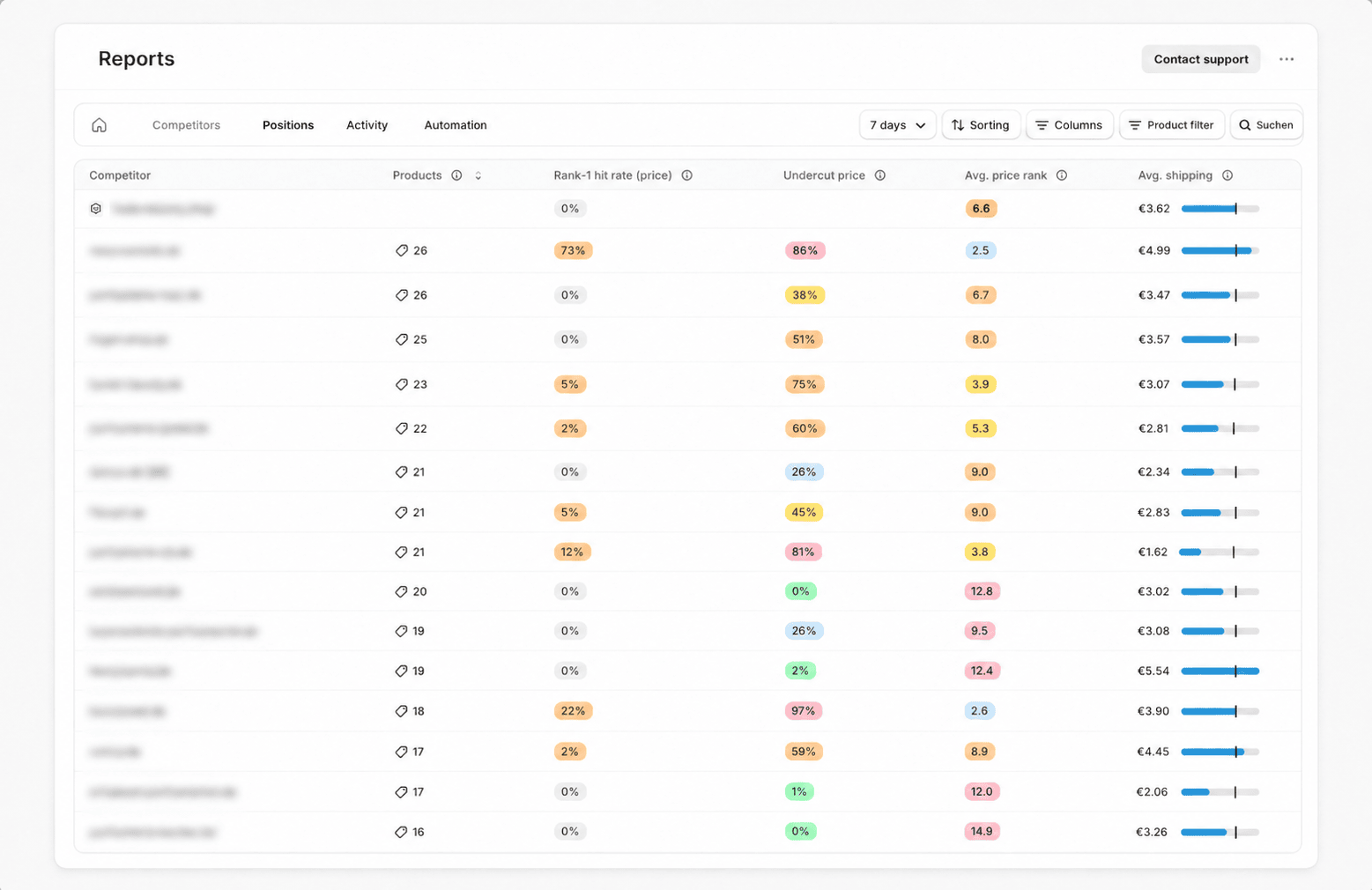
Competitor report across the marketplace
- The reports summarize positions, competitors, and price activity per marketplace.
- The product metrics show where each product stands and how stable its position is.
- The automation report makes traceable which price changes your strategies triggered.
Understand channel performance
Tell us your marketplaces. We will show the matching reports.