If you sell into Germany, sooner or later you run into Idealo. It is the country’s largest price comparison site – by its own count listing offers from more than 50,000 shops – and for many product categories it is where German buyers actually start their purchase, the way US shoppers might start on Amazon or Google Shopping.
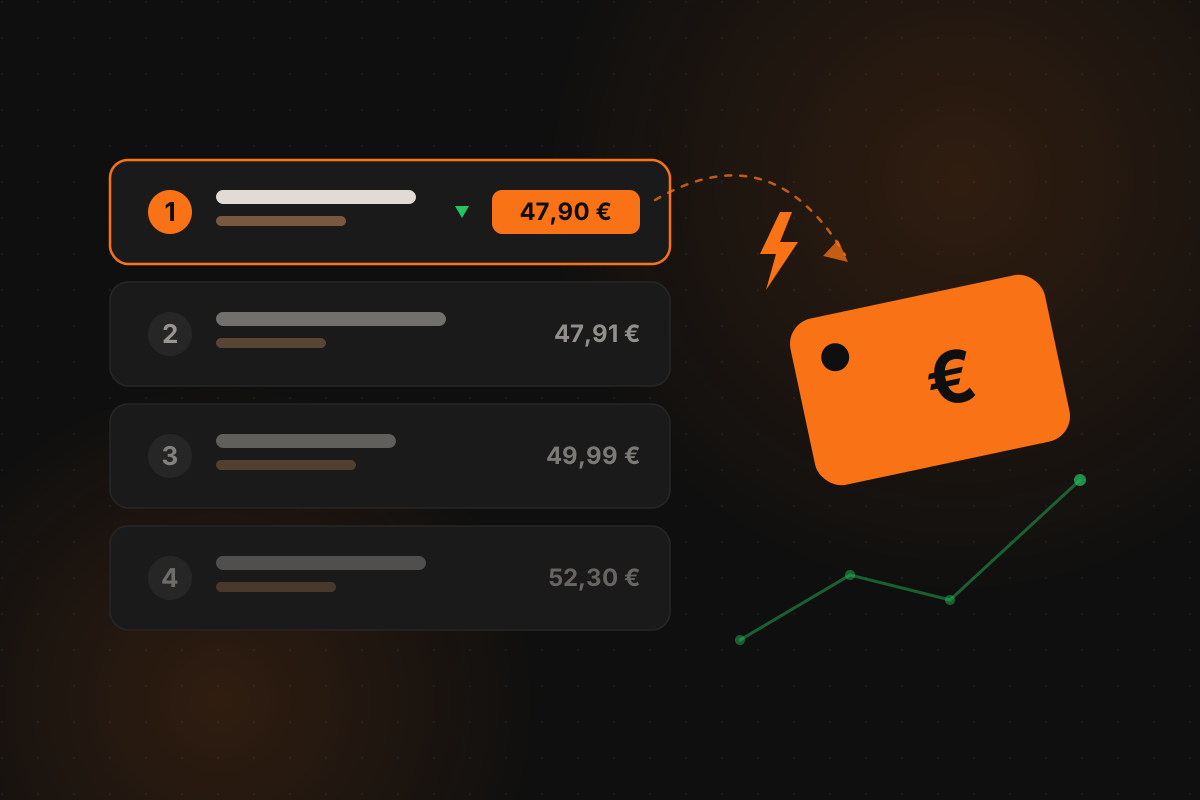
Idealo has one defining property that surprises most international sellers: the ranking is the price. No ad auctions for the offer list, no seller-performance weighting that outranks a better price. The offer list for each product is sorted by price, and the first one or two positions take almost all the clicks. That makes repricing – automated, rule-based price adjustment – the core mechanic of the channel, not an optimization on top of it.
What is Idealo, and why does it matter for sellers entering Germany?
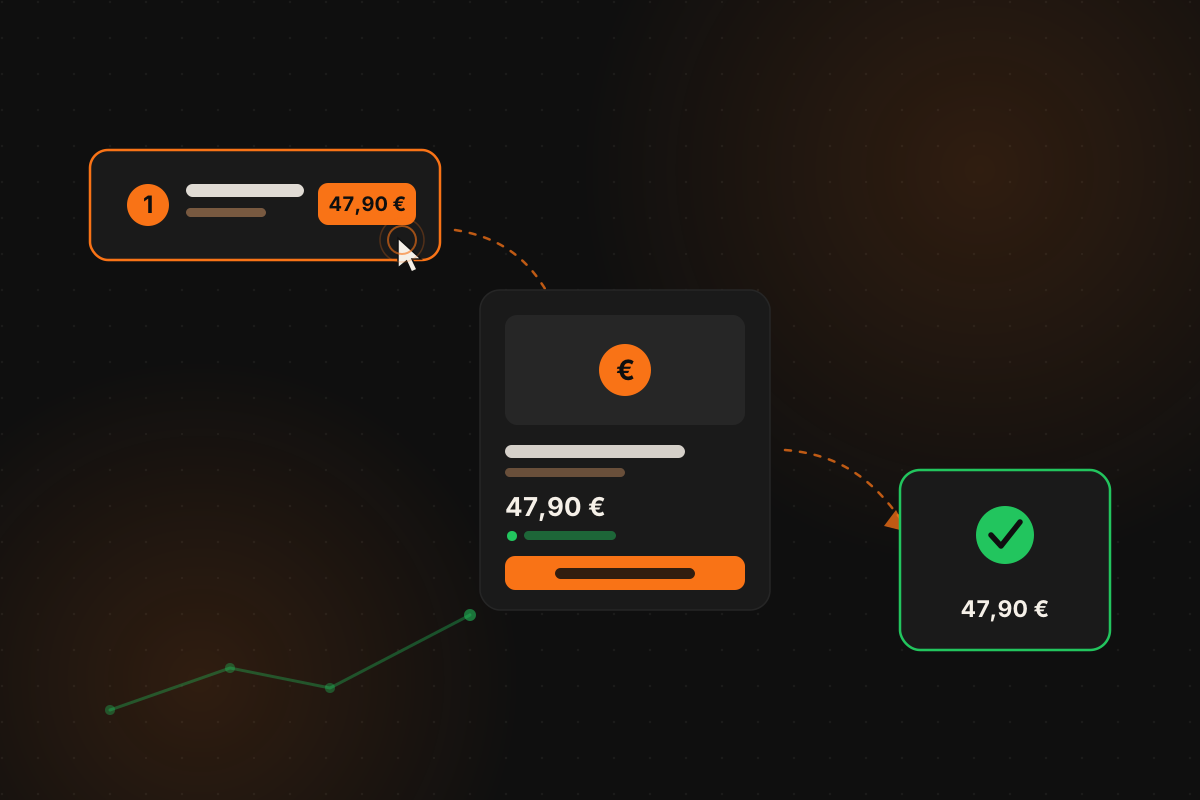
Idealo is a price comparison engine: shoppers search for a specific product and see all shops offering it, sorted by price. Sellers connect via a product feed, get listed under the matching product pages, and pay per click (CPC) when a shopper clicks through to their store.
For international sellers, Idealo has three attractive properties:
- High-intent traffic: people comparing prices for a specific product are at the very end of their buying journey.
- A level playing field: unlike marketplace search results, the offer ranking cannot be bought. A new foreign shop with the best total price ranks above an established German retailer.
- DACH reach: Idealo operates in Germany, Austria, and other European markets – one integration covers the region’s price-comparison demand.
The flip side: a level playing field that is decided purely on price is brutal to compete on manually.
How the Idealo ranking actually works
Three mechanics determine your economics on Idealo:
1. The item price decides the position
Idealo sorts offers by item price – shipping costs are not part of the sort. They are far from invisible, though: Idealo highlights the total price right next to each offer. This nuance trips up sellers entering the German market: a low item price with inflated cross-border shipping can win position 1 and still lose the sale, because shoppers see the total before they click. Competitive repricing and honest shipping costs have to work together.
2. The first positions take the demand
Idealo shoppers come to find the cheapest trustworthy offer, and the click distribution shows it: position 1 takes roughly 60% of the clicks, and below position 3 almost nothing arrives. Position 1 also converts better, not just more often – many shoppers click through to several shops, compare once more, and still buy where the price is lowest. Visibility on Idealo is not a curve, it is a cliff.
3. You pay per click, sale or not
Because the classic listing is billed per click, a wrong price position is doubly expensive. Priced too far above the best offer, you get no clicks at all. Priced just slightly above it, you pay for clicks from shoppers who compare once more and buy from the cheaper shop. Repricing ensures the clicks you pay for land on a competitive offer.
(Not listing on Idealo yet? Start with our guide to selling on Idealo.)
The metric that decides the economics is your conversion rate: it determines how many paid clicks actually become sales. And it depends not only on your price position, but heavily on how optimized the product page behind the Idealo click is – load time, product data, shipping information, and trust signals all decide whether an expensive click turns into a purchase. For sellers entering the German market, that includes German-language content and locally expected payment methods. How to optimize each of these levers is covered in our guide on improving your conversion rate on Idealo.
How automated repricing works, step by step
A repricing system for Idealo runs a continuous loop:
- Price monitoring: the tool tracks competitor offers for each of your products on Idealo – prices, shipping costs, and positions.
- Rule evaluation: your strategy is applied to the market data: which position are you targeting, at what distance to the next-cheapest offer, and above which price floor?
- Price calculation: the result is a new target price – for example, “1 cent below the cheapest competitor, but never below €27.90.”
- Price update in your shop: the new price is written into your shop system. This matters: Idealo reads prices from your product feed, so your shop stays the single source of truth and the comparison site never shows a price your store doesn’t.
- Update on Idealo: depending on your integration, the new price goes live with the next feed sync or – via Idealo’s PWS API – almost immediately, along with your new position.
Then the loop starts again – because your competitors are running the same race.
The non-negotiable: a minimum price per product
Repricing without a price floor is a race to the bottom. Every serious setup starts with one question per product: what is the lowest price at which this sale is still worth making? Purchase cost, shipping, Idealo click costs, payment fees, and your target margin define a minimum price. Below that line, a good repricing tool withdraws the product from the price war instead of producing revenue without profit – a rule that matters even more when cross-border logistics make your cost base higher than local competitors’.
The calculation itself can be automated, too: a good repricing tool derives each product’s minimum price from stored unit costs, taxes, fees, and target margin. When purchase prices or conditions change, the floors across your whole catalog follow automatically – no spreadsheet maintenance involved.
Entering the German market via Idealo? PricePirate connects your Shopify store to Idealo in minutes and reprices by your rules – with minimum prices that protect your margin. Start your free trial
Repricing strategies that work on Idealo
The right strategy depends on your catalog, margins, and competitive density – and good setups combine several approaches, per product and even per time of day. These are the building blocks:
Beat the cheapest
The classic: your price is set a fixed minimum amount below the cheapest competing offer. Optionally, the tool rounds the result down to a cosmetic ending such as .99 or .90 – turning a calculated €20.03 into a psychologically clean €19.99. Since position 1 takes roughly 60% of the clicks and converts best, this is the default strategy for products with healthy margins.
Match the cheapest
Here your price is set exactly to the cheapest offer, not below it. That sounds defensive, but it is often the smarter play: when a competitor also reprices dynamically, two “beat” strategies undercut each other in a loop – a bidding war that ends with both shops at their price floor. Matching lets you share the top position instead of buying it from each other every few minutes.
Reprice upwards, too
Repricing does not only mean getting cheaper. If your offer is far below position 2, you are giving margin away. A good strategy automatically raises your price to just under the next competitor. Manual price management almost always misses this step – automated repricing collects it for free.
Control the timing: not every hour needs a fighting price
During periods of high organic demand – seasonal peaks, high-traffic hours – many products sell without an aggressive price position. Underbidding then cannibalizes sales that would have come anyway, trading margin for nothing. The when is part of the strategy: in PricePirate you can configure at which times a strategy is active – aggressive when you need the push, relaxed when demand carries itself.
Defuse bidding wars: resets, frequency, boosts
If two repricers lock into a downward race, three levers work alongside matching: a price reset returns prices to their starting value at a fixed time – say, midnight – so the race restarts instead of prices staying at the bottom indefinitely. A higher update frequency lets you react to market moves faster than the competition does. And boosts concentrate frequent price updates on the hours when position has the biggest revenue impact.
Speed decides: how fast does your price reach Idealo?
Every strategy is only worth as much as the time a new price needs to reach Idealo. Two delays add up: applying the price in your shop system, and transferring it to Idealo. Idealo typically reads the classic CSV feed only every 30 minutes, and many connector solutions add their own lag – in total, a price change can take up to an hour to arrive. Idealo’s PWS API is much faster, applying price updates almost instantly. Our Shopify app idealo EasyConnect provides that PWS integration – combined with PricePirate, price changes reach Idealo in under 5 minutes.
Dynamic discounts: lower your Idealo price without touching your shop price
Sometimes you want to win a better position on Idealo without lowering the regular price in your own shop – for example, to avoid handing the same discount to customers who buy directly from you. That is what dynamic discounts are for: PricePirate generates a discount link that applies the lower price only on the marketplace. Your regular Shopify price stays unchanged, and only shoppers who arrive via the Idealo offer link get the discount – so you improve your marketplace position without giving away margin across your whole store. See the overview of dynamic discounts.
Idealo repricing with PricePirate
PricePirate is a repricing and price-monitoring tool built specifically for sellers on Idealo – delivered as a Shopify app that is live in minutes, with an English interface and a team that knows the German market:
- Automatic matching: your Shopify products are matched to the right Idealo listings via EAN/GTIN or title – no manual list maintenance.
- Continuous monitoring: PricePirate tracks competitor prices and positions on Idealo, so you always know where your offers stand.
- Rules with guardrails: target position, price distance, and minimum price are configured per product – and PricePirate can calculate minimum prices automatically from unit costs, taxes, fees, and target margin. Your margin stays protected.
- Reviewed or automatic price changes: you decide whether price suggestions wait for your approval or apply automatically. Changes are written directly to Shopify, so your Idealo feed stays consistent with your store.
- Beyond Idealo: prices from Google Shopping, Klarna, and Allegro can be monitored as well – a view of the whole European market, not a single channel.
PricePirate currently holds a 5.0-star rating on the Shopify App Store.
Start your free trial and meet PricePirate in a personal demo.
Which shop systems are supported?
PricePirate is built natively for Shopify: install the app, match your products, set your strategy. Sellers on other platforms or with custom infrastructure can pull Idealo price data from the PricePirate API and connect their own repricing logic.
Frequently asked questions
Is repricing allowed on Idealo?
Yes. Repricing automates what merchants do anyway: adjusting prices to the market. Prices still originate in your shop and reach Idealo through the regular feed integrations. What matters is that your shop price and your Idealo price match – which shop-based repricing guarantees by design.
Can international sellers list on Idealo at all?
Yes – Idealo lists foreign shops that serve German customers. You need German-language product data, prices in euros, and transparent shipping costs to Germany. Shipping does not affect your position, but Idealo displays the total price prominently – uncompetitive cross-border shipping costs you the sale after the click, so logistics remain part of your pricing strategy.
How often should prices update?
As often as the market moves. In competitive categories, Idealo positions change several times a day, and intraday repricing is the norm there. Slow niche categories need less.
Is repricing worth it for small shops?
Especially for small shops: if you don’t have an organic customer base yet, price comparison sites are the fastest way to gain reach and first sales – provided your price position is competitive, which is exactly what repricing ensures. One honest caveat belongs here: price comparison shoppers are deal hunters, and few of them become loyal repeat customers. Idealo is a revenue and visibility channel first – building customer loyalty remains the shop’s own job.
PricePirate is an independent product of UCX Media and has no business, partnership, or other affiliation with idealo internet GmbH.