
August 25, 2026
Case Study: How Levamour Scales Its Own Online Shop with Idealo Repricing
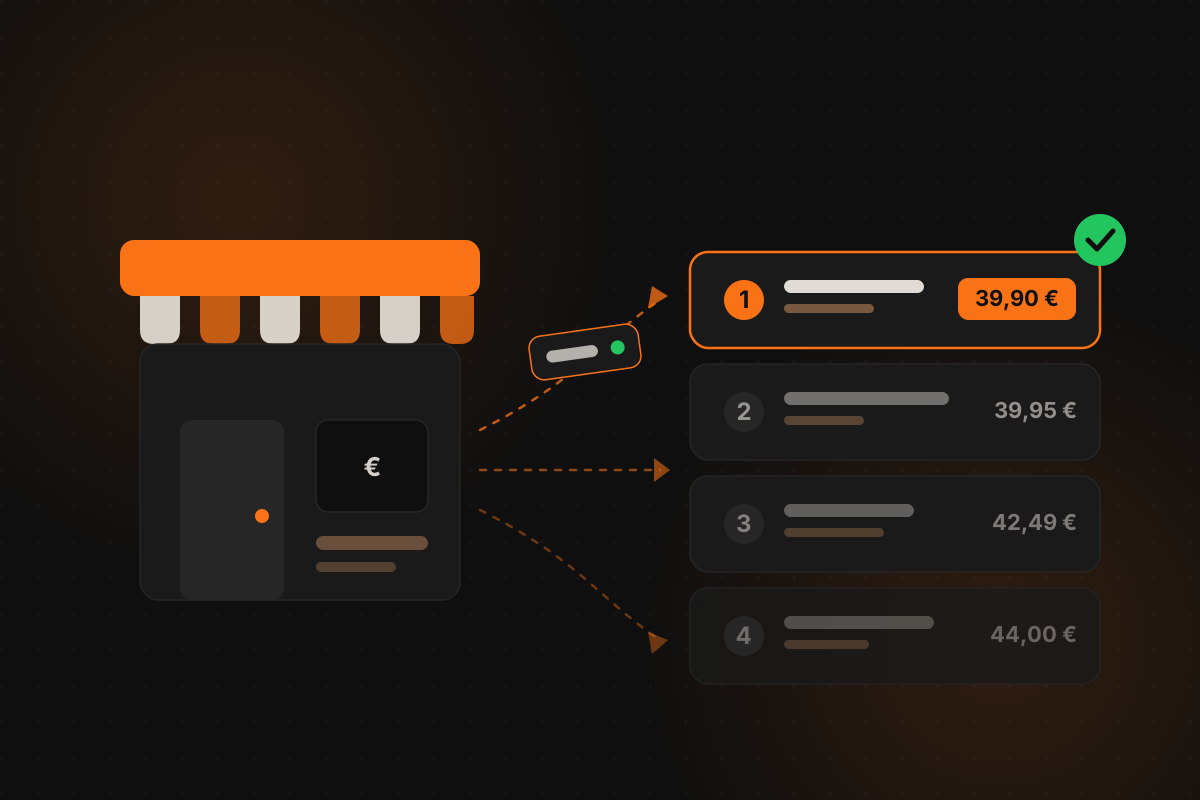
From TikTok Shop to their own online store with Idealo traffic: how perfume retailer Levamour doubled its conversion rate with automated repricing.
Idealo is the price comparison site that dominates the German market. This guide covers registration, costs, the product feed, and pricing strategy for merchants entering the channel.
Published on by Sergei Gaponik in Idealo
If you sell into Germany or Austria, sooner or later you run into Idealo. It is the price comparison site of the German-speaking market: by its own numbers, over 120 million visits per month across Europe, more than 18 million monthly users in Germany alone, and around 50,000 connected shops. German shoppers use it late in the buying process: product already chosen, decision already made, just looking for the best offer. For merchants with comparable products (anything with an EAN/GTIN barcode), that makes Idealo one of the most direct acquisition channels in the market.
This guide covers what you need to know before listing: registration and approval, the actual costs, the technical integration, how the ranking works, and the pricing strategy without which the channel gets expensive fast.
Idealo is a pure price comparison site, not a marketplace: shoppers compare offers on Idealo and complete the purchase in your shop. You keep the customer relationship, the checkout, and the data; Idealo delivers the traffic and charges per click.
The audience skews exactly the way you would expect from a price comparison site: high purchase intent, high price sensitivity. In our own data from connected shops, Idealo traffic converts at 3–6% with a competitive price position, noticeably above the global e-commerce average of 2.66% (Dynamic Yield) – but drops sharply when your offer is visibly more expensive than the competition. The channel rewards price competitiveness and punishes everything else; plan for that before you connect.
Registration runs through the idealo Business Center: create an account, submit your shop details, and wait for review. If the review is positive, Idealo sends a contract offer with your conditions; after signing, the technical integration begins.
The review is the step merchants underestimate. Idealo checks that listed shops are legitimate; its reputation with German shoppers depends on it. Expect scrutiny of the basics German e-commerce law and German buyers demand: a complete legal notice (“Impressum”) with a reachable phone number, current terms and conditions, at least two payment methods including a secure one (invoice, credit card, direct debit, or PayPal), HTTPS, and a correct 14-day right of withdrawal. New shops without any track record are occasionally rejected on these grounds – and a rejection costs more than it looks: Idealo imposes a waiting period of up to several months before the shop can be submitted again. If you are launching fresh, have the full list in place before applying instead of just giving it a try. (Dropshipping shops get listed too, by the way, as long as stated delivery times are honest and kept.)
International merchants can list on idealo.de – no German legal entity required. Practically speaking, though, the same rule applies as everywhere in German e-commerce: German shoppers expect German-language product pages, familiar payment methods, and clear shipping times, and your conversion rate will reflect how well you deliver on that.
Idealo bills the listing on a CPC basis (cost per click): you pay when a shopper clicks through to your shop: nothing per listing, nothing per sale. Current conditions (source: Idealo, as of July 2026):
The number that actually matters is derived: acquisition cost per sale = CPC ÷ conversion rate. At €0.51 CPC and a 3% conversion rate, a sale costs €17 in clicks; at 1.5%, the same sale costs €34. Whether Idealo pays off is decided less by the click price than by how many paid clicks become orders. That depends mostly on your price position. The full click-to-purchase chain is covered in our guide on improving your conversion rate on Idealo.
Idealo reads your offers from a product data feed or an API. Two options:
The mandatory fields are manageable: title, price, shipping costs, availability, product URL – and the EAN/GTIN. It is the single most important field in the feed, because Idealo matches your offer to the right product via the EAN. No EAN, no comparison; wrong EAN, comparison against the wrong product. If your catalog uses UPC/ASIN-style identifiers only, resolving proper GTINs is step zero.
For Shopify merchants, the integration is an afternoon project: our Shopify app idealo EasyConnect, an official idealo technology partner, generates the feed from your Shopify catalog automatically, with filtering, field mapping, and a live preview. The CSV feed is free up to 200 variants; real-time price updates run via the PWS API.
Idealo sorts a product’s offer list by item price. Not by ad budget, not by seller history, and not by total price: shipping costs are not part of the sort, but they are highlighted right next to the offer; shoppers see the total at a glance.
The consequence is a brutally steep click distribution: position 1 gets around 60% of the clicks, and almost nothing arrives below position 3. Idealo itself put the split at over 50% for position 1, 18% for position 2, and 10% for position 3 in a partner presentation (as of 2020). The second, less obvious effect: conversion is also highest at position 1. Many shoppers click through several shops, but they buy where the price is lowest.
Trying to game the sort (low item price, inflated shipping) wins the position and loses the sale at the highlighted total price. And the click still gets billed.
The ranking logic means price position is effectively the only visibility lever on Idealo – and it moves. In competitive categories, positions change several times a day as other merchants reprice. Adjusting prices once a day by hand is structurally too slow: a competitor undercuts you at 10 a.m., you notice the next morning. By then you have paid a full day of clicks on an uncompetitive position.
Just as important as speed is the floor: purchase cost, shipping, click costs, payment fees, and target margin add up to a minimum price per product below which a sale no longer makes sense. A pricing strategy without that guardrail is a race to the bottom with no finish line.
Both together – continuous rule-based repricing and hard minimum prices – are exactly what a repricing tool automates. How that works in detail, which strategies have proven themselves, and how to defuse bidding wars: Idealo Repricing: How Automated Pricing Works on Germany’s Largest Price Comparison Site.
Plan for a few business days for the review, plus the time for technical integration. Complete documentation (legal notice, terms, payment methods; see the checklist above) speeds things up noticeably; gaps there are the most common cause of delay.
Yes. International merchants can list on idealo.de. The practical bar is the German shopper, not Idealo: German-language content, expected payment methods, and honest shipping times decide whether the traffic converts.
No. The Idealo listing bills per click (CPC) only, whether or not the click converts. That is exactly why conversion rate is the channel’s defining metric.
Yes: the PWS API handles real-time price and availability updates, alongside the classic CSV feed. For Shopify stores, idealo EasyConnect covers both without custom development.
Especially for small ones: without an organic customer base, the price comparison is the fastest route to reach and first sales, provided the price position is competitive. The honest caveat: price comparison shoppers are bargain hunters and rarely become loyal customers. Idealo delivers revenue and visibility; retention is your shop’s job.
Entering the German market via Idealo? PricePirate monitors your Idealo positions, reprices by your rules directly in Shopify, and protects your margin with automated minimum prices. Start your free trial and meet PricePirate in a personal demo.
PricePirate is an independent product of UCX Media and has no business, partnership, or other affiliation with idealo internet GmbH.
Published on by Sergei Gaponik in Idealo
August 25, 2026
From TikTok Shop to their own online store with Idealo traffic: how perfume retailer Levamour doubled its conversion rate with automated repricing.
June 05, 2026
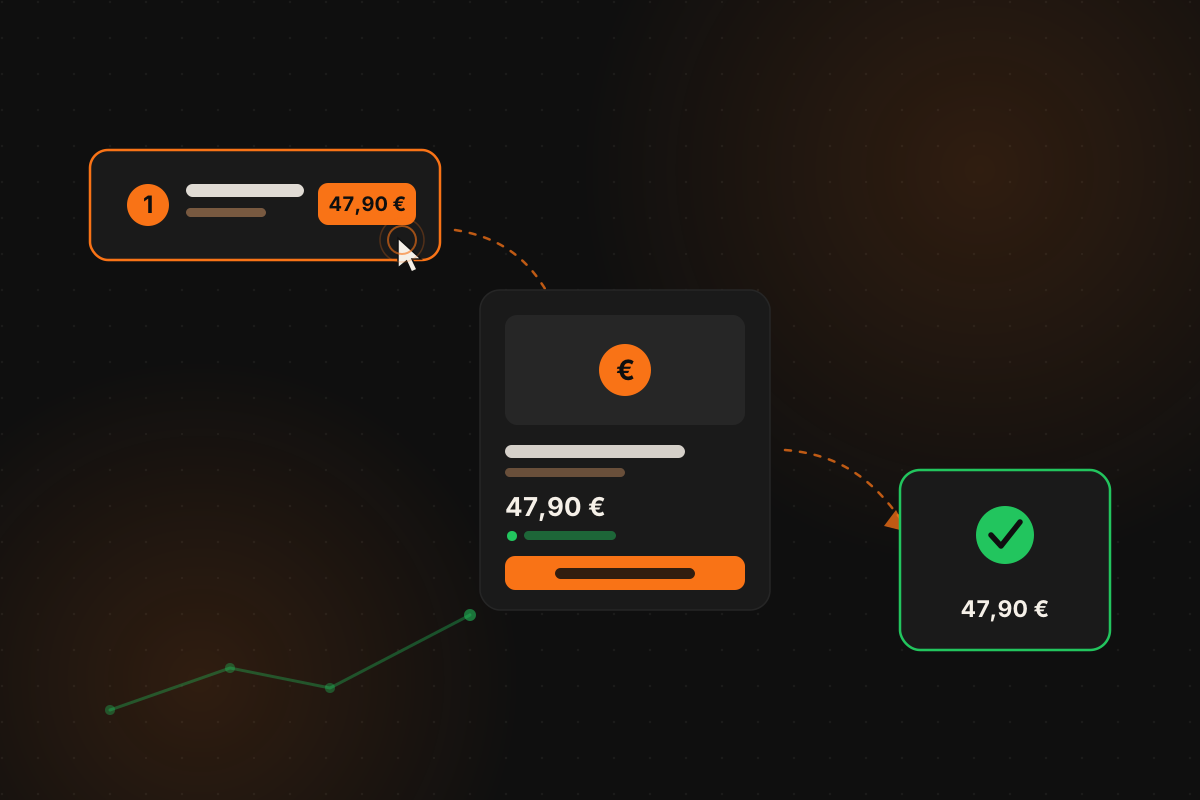
Paying for Idealo clicks that don't convert? How price position, price parity, your product page, and checkout decide whether German shoppers buy – with benchmarks vs. Google Shopping.
May 29, 2026
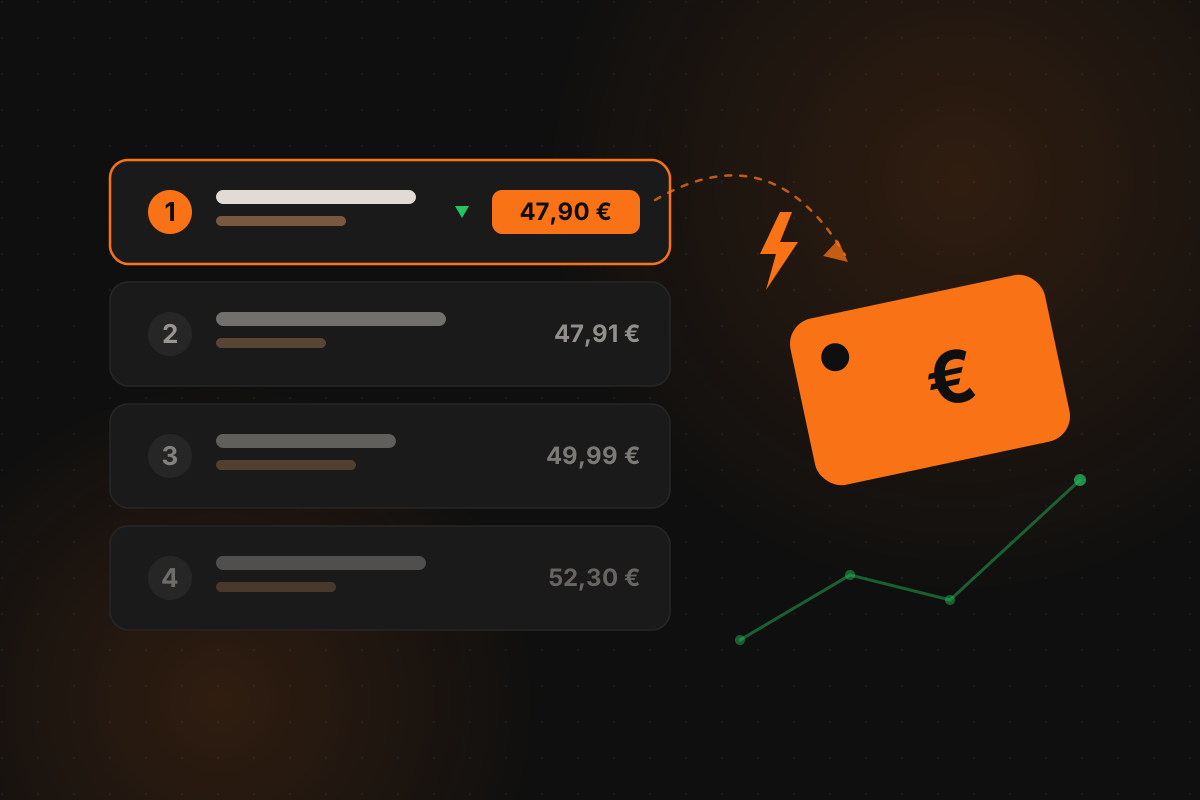
Selling into Germany? How repricing works on Idealo: the price-only ranking, proven strategies, minimum prices – and the tooling international sellers need.