At first glance, Idealo and Google Shopping do the same thing: show product offers with prices and send clicks to your shop. Underneath sit two fundamentally different systems: in business model, cost structure, and above all in how an offer gets to the top. For merchants selling into Germany, where Idealo is a household name, the difference is worth understanding before budget flows into either channel.
The short version:
| Idealo | Google Shopping |
|---|
| Model | price comparison, billed per click | ad auction (plus free listings) |
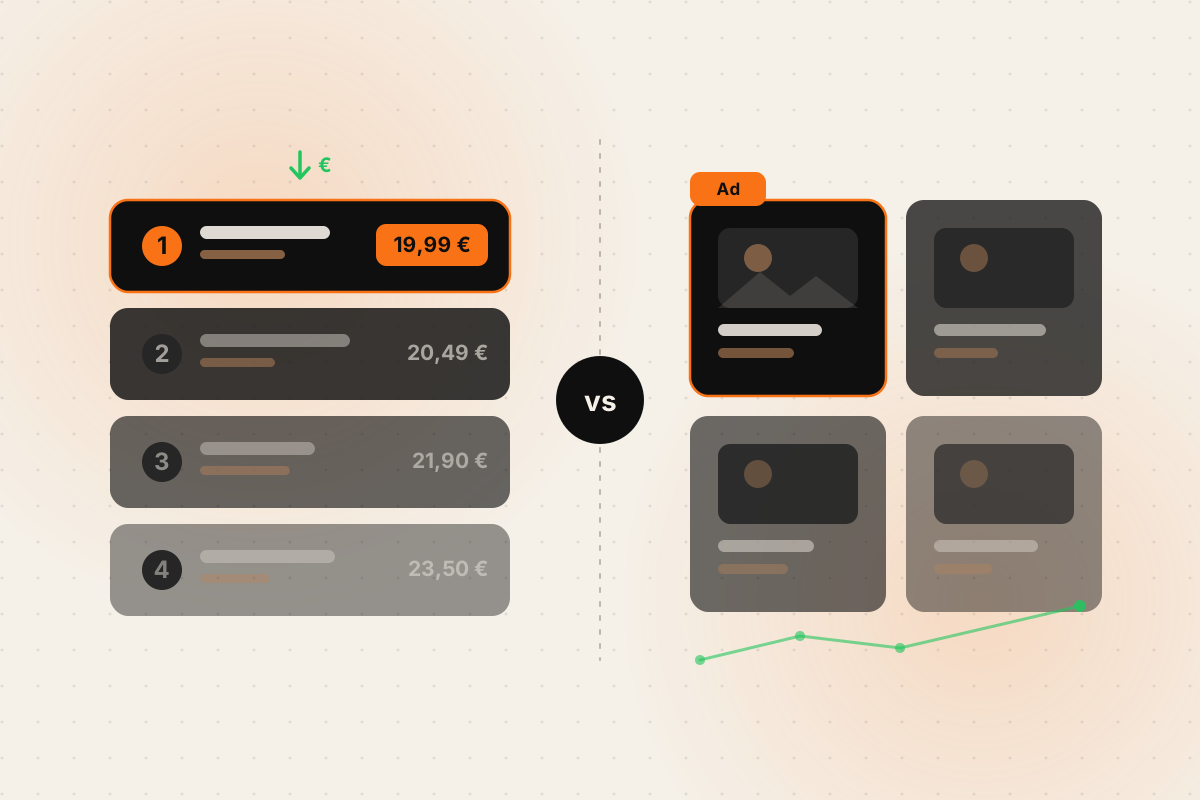
| Ranking | item price – the top spot cannot be bought | bid × relevance × feed quality |
| Click price | contractually fixed (standard €0.51) | auction-driven, fluctuating |
| Buyer intent | decision made, hunting the best offer | exploratory to ready-to-buy |
| Strength | predictable costs, high conversion at a good price position | reach, works for non-comparable products too |
How Idealo works for merchants
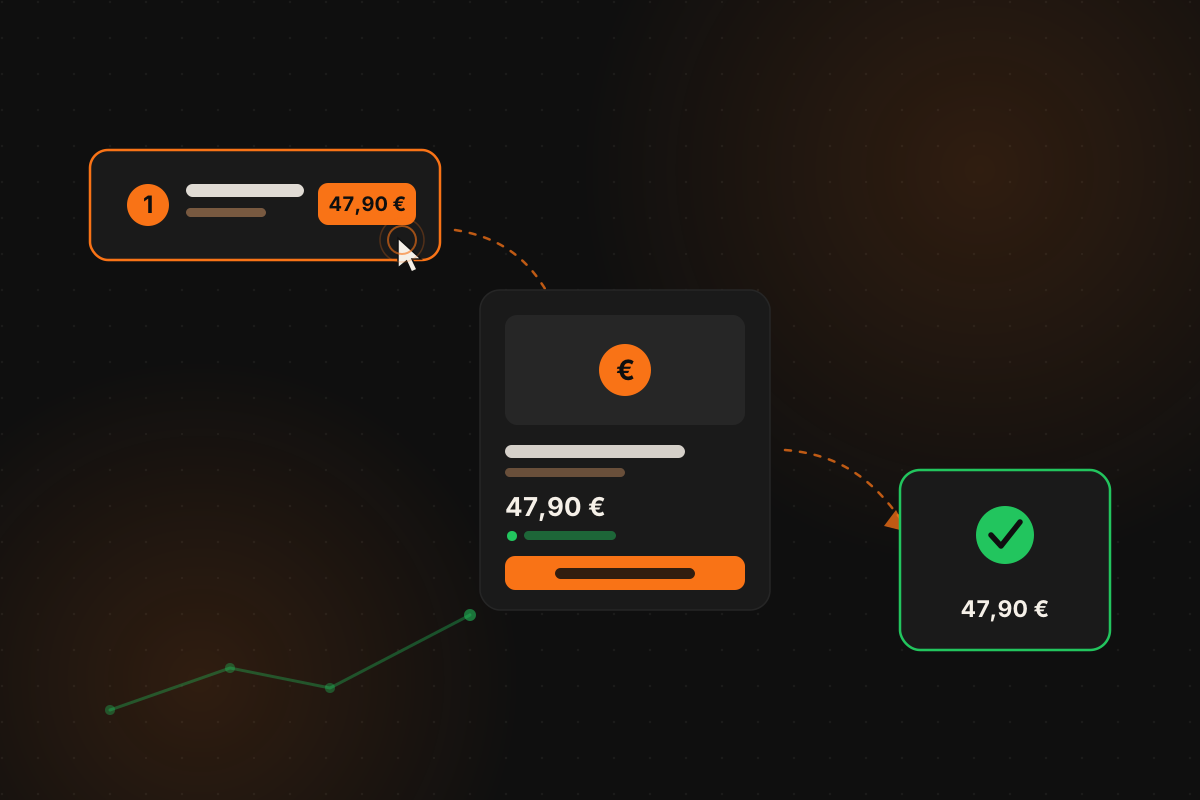
Idealo is a pure price comparison site: shoppers compare offers, the purchase happens in your shop. A product’s offer list is sorted by item price; a top position cannot be bought, only priced into. Billing is per click at contractually fixed rates: a standard CPC of €0.51 for contracts since April 2025, typically €0.30–0.80 depending on category, plus a €20 monthly minimum (as of July 2026).
Reach, per Idealo’s own numbers: over 120 million visits per month across Europe, more than 18 million monthly users in Germany. Participation requires comparable products with EANs/GTINs and a shop that passes Idealo’s legitimacy review. All of it is covered in our guide to selling on Idealo.
Google Shopping is first and foremost an ad format: the product tiles above and beside the search results are Shopping ads, allocated through an auction. The basis is a product feed in Google Merchant Center, delivered via Shopping campaigns or Performance Max. Free listings exist in the Shopping tab: welcome extra reach, but the visible slots at the moment of purchase belong to the ads.
Two particularities worth knowing:
- The click price is not fixed. It comes out of the auction, driven by competition, season, and category. That makes costs harder to plan than on Idealo.
- CSS partners: In Europe, Shopping ads run either through Google’s own comparison service or through a CSS partner. Booking directly through Google means Google keeps a share of your bid (communicated as up to 20%; industry estimates run somewhat lower); through a CSS partner, the full bid enters the auction. For shops with meaningful Shopping budgets, a CSS partner is less a secret weapon than a hygiene factor. Nobody should expect a performance miracle.
Cost models compared
The metric that decides both channels is the same: acquisition cost per sale = click price ÷ conversion rate. A sample calculation with realistic values:
| Idealo | Google Shopping |
|---|
| Click price | €0.51 (fixed) | €0.50 (auction-driven, illustrative) |
| Conversion rate | 4% (competitive position) | 3% (European retail average) |
| Click cost per sale | €12.75 | €16.67 |
The conversion figures: ~3% for Google Shopping in Europe per the smec Market Observer (as of June 2026); the Idealo range of 3–6% at a competitive position comes from our own data from connected shops. The catch: on Idealo, that math only holds at a good price position. Offers priced visibly above the best price drop to 0.5–2.5% conversion in our data; then the calculation flips, hard. The full benchmarks are in our guide on improving your conversion rate on Idealo.
Traffic and buying intent
The difference in buyer behavior comes down to funnel stage. A Google Shopping click often comes from a broad search: many users are still comparing, clicking around, buying later or elsewhere. An Idealo user is already inside the price comparison: product chosen, decision made, looking for the cheapest legitimate offer.
Idealo traffic is therefore both at once: higher intent, but more price-sensitive. Precisely because the user only wants the best offer, conversion reacts sharply to price position. Google Shopping traffic forgives a mediocre price position more readily. But you also pay there for clicks from users who never intended to buy.
Price logic: who wins the top spot?
This is the fundamental difference between the two systems:
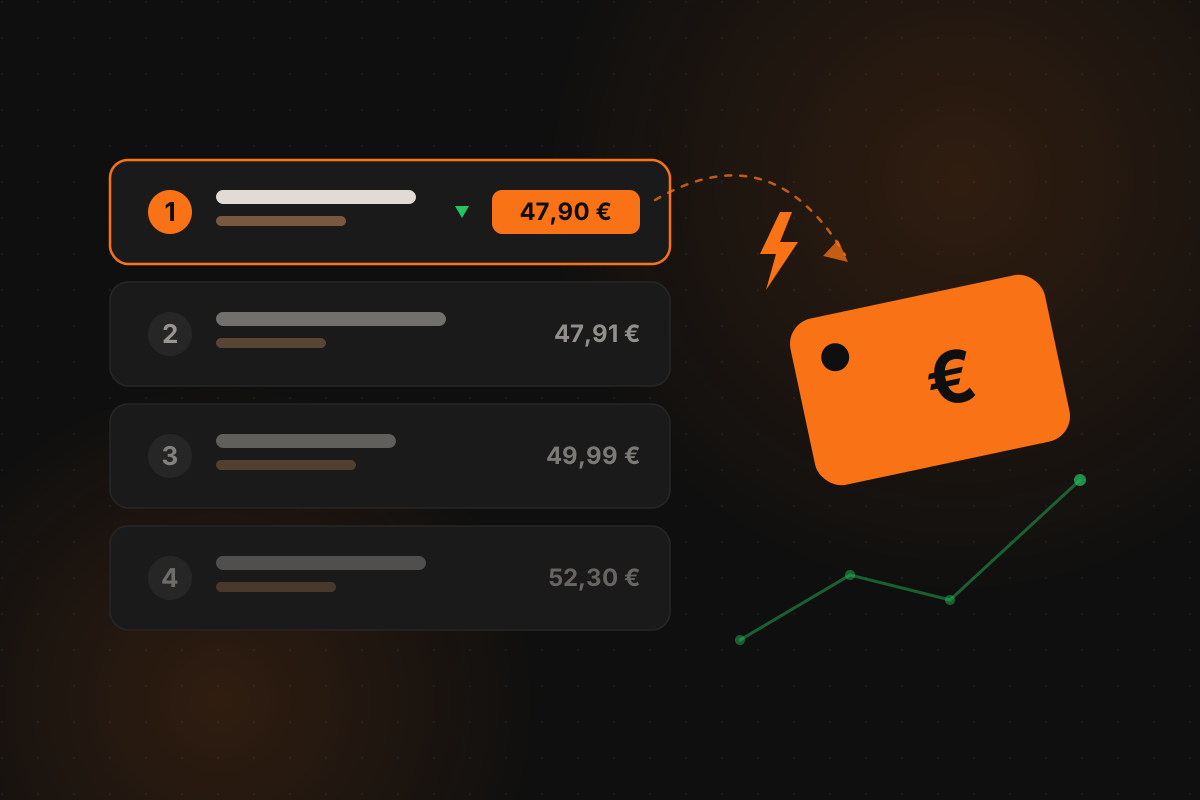
- Idealo sorts by item price. Position 1 gets around 60% of the clicks, almost nothing arrives below position 3; conversion is highest at position 1 as well. The only lever is price; budget cannot compensate for a poor price position.
- Google Shopping blends. Visibility comes from bid, expected click-through rate, relevance, and feed quality. Price acts indirectly: a competitive price improves CTR and conversion, but a higher bid can partially offset a weaker price.
For your day-to-day, that means: on Google Shopping you optimize campaigns, bids, and the feed. On Idealo you optimize exactly one thing – the price position. How to reach and hold it automatically without sacrificing margin: Idealo Repricing.
What this means for your pricing strategy
Running both channels takes a pricing strategy that serves both logics – and one shared floor. Purchase cost, shipping, click costs, payment fees, and target margin add up to a minimum price per product that no channel gets to break. Above that line, the plays differ: on Idealo it’s the gap to the cheapest competitor, on Google Shopping the interplay of price and bid.
In both cases, competitor prices move several times a day. A price monitoring tool like PricePirate tracks your positions and competitor prices on Idealo continuously, and also monitors Google Shopping, Klarna, and Allegro, so the strategy runs on market data instead of spot checks.
Verdict: which channel for which merchant?
- Idealo first if you sell into the German-speaking market, carry a price-competitive assortment with EANs, and want predictable acquisition costs. Especially as a smaller shop without organic reach, it is the fastest route to ready-to-buy visitors.
- Google Shopping first if your products resist comparison (private label, one-offs, configurable products), you sell internationally, or you need maximum reach beyond the moment of purchase.
- Both in parallel is the norm for growing shops: the feed effort is similar anyway and the channels barely cannibalize each other. But measure conversion rate and acquisition cost per channel, separately. An average across both hides exactly the differences that matter.
FAQ
Yes, and most growing shops do. Both channels feed off a product data feed; with a clean feed, serving both is little extra work. What matters is measuring success per channel.
What does Idealo cost?
Standard CPC of €0.51 for new contracts (as of July 2026), €0.30–0.80 depending on category, plus a €20 monthly minimum. The details (including how that turns into acquisition cost per sale) are in our guide to selling on Idealo.
Do both channels use the same feed?
The underlying data is the same (title, price, shipping, availability, EAN/GTIN); formats and mandatory fields differ in detail. Feed tools generate both variants from one source – for Shopify stores, our app idealo EasyConnect covers the Idealo side.
With a meaningful Shopping budget: sensible, because otherwise part of every bid evaporates as Google’s margin. Just don’t expect a performance jump: it’s a cost correction, not a new channel.
Price position under control on both channels? PricePirate monitors your prices and positions on Idealo, Google Shopping, Klarna, and Allegro – and reprices Idealo automatically by your rules. Start your free trial and meet PricePirate in a personal demo.
PricePirate is an independent product of UCX Media and has no business, partnership, or other affiliation with idealo internet GmbH.